§ IVReal-World Applications
Producing the work versus owning it.
In each case the artefact is real. What is in question is whether the person could evaluate, defend, or execute it.
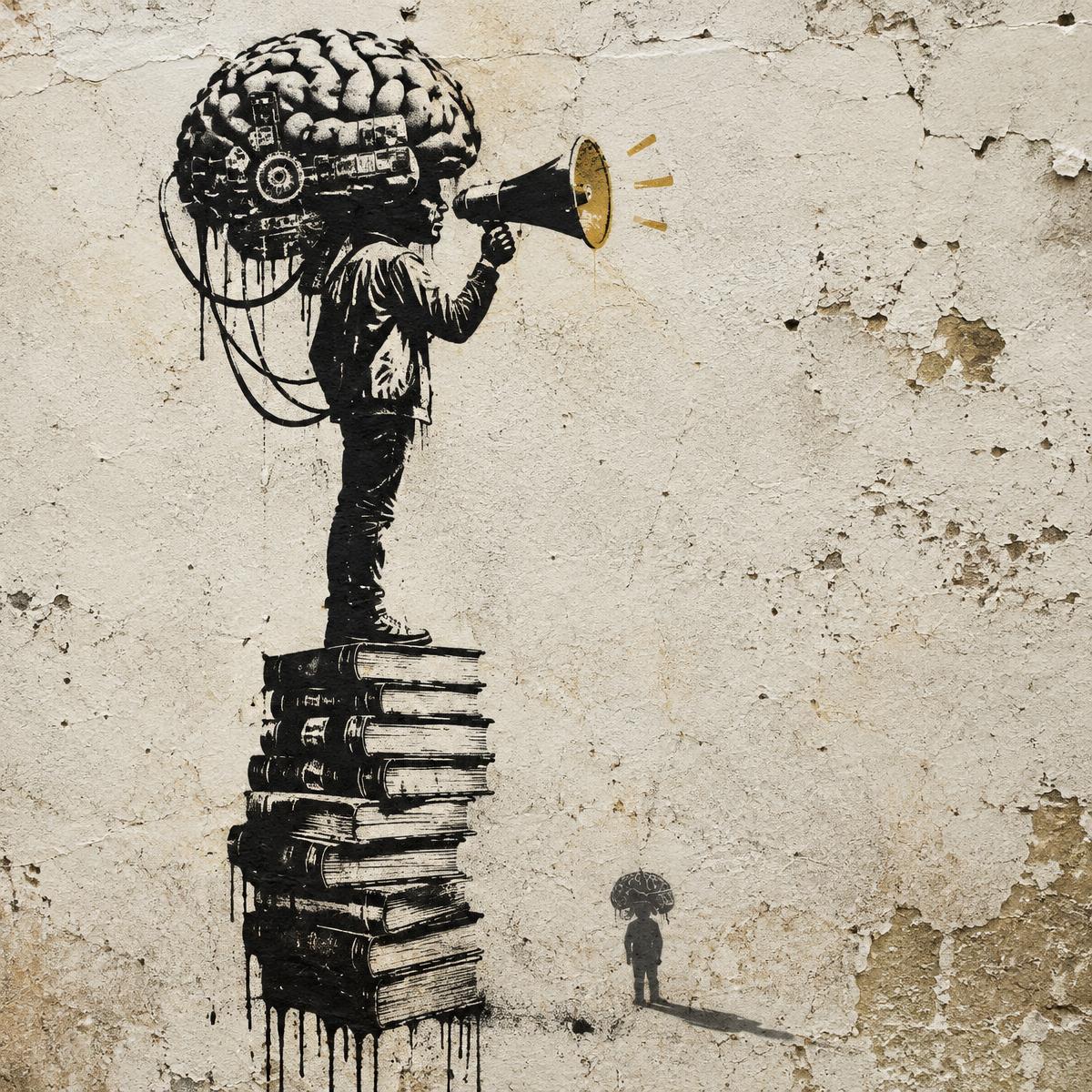
Plate II — Amplified, not enlarged
Case 01
Business strategy
The artefact
A founder produces a market-entry memo with segmentation, pricing tiers, and a competitive matrix.
The gap
Asked why one segment was prioritised over another, they can restate the memo but cannot say what evidence would change the recommendation. The document is defensible only by re-prompting.
Case 02
Software development
The artefact
A developer ships a feature assembled from generated code that passes the happy-path tests.
The gap
When a race condition appears in production, they cannot read the concurrency model they deployed. Generating code and owning its failure modes are distinct competencies.
Case 03
Legal analysis
The artefact
A non-lawyer drafts a contract clause that reads exactly like professional drafting.
The gap
Its enforceability depends on jurisdiction, precedent, and the counterparty's likely interpretation — none of which fluency establishes, and some of which the system may have fabricated.
Case 04
Entrepreneurship
The artefact
A financial model arrives with sensible-looking growth curves and unit economics.
The gap
The assumptions driving it are buried in parameters the founder never chose. Confidence in the output is, in effect, confidence in defaults.
Case 05
Education
The artefact
A student submits an essay with a clear thesis and well-organised argument.
The gap
In an oral examination, the student cannot construct a counterargument. The essay demonstrates the system's ability to argue, not the student's.
Case 06
Professional consulting
The artefact
A consultant delivers a polished framework deck to a client in an unfamiliar industry.
The gap
The client's first pointed question about operational constraints reveals that the framework was never tested against the industry's realities.
Case 07
Unsolicited advice
The artefact
Someone forwards a detailed AI-generated plan for another person's health, career, or business.
The gap
The advice carries the sender's confidence and the system's vocabulary, but neither the sender's accountability nor the recipient's context.